Falls are the leading cause of serious injury among adults age 65 and older, and even a single fall can put a senior’s independence at risk. Many seniors benefit from a combination of home health care and non-medical home care to recover safely and continue living independently.
While home health and home care are distinct services, they complement each other. Home health care focuses on medical and clinical needs, such as nursing, therapy, and monitoring, while home care provides everyday support like personal care, meal preparation, light housekeeping, medication reminders, and companionship. Together, these services ensure seniors receive the full spectrum of care, providing medical attention when required and consistent daily support to maintain safety, routines, and quality of life.
What Is Home Health?
Home health care brings skilled medical support directly into your home. Unlike non-medical personal care and homemaker, home health aides focus on clinical needs, providing nursing, therapy, and other medical services prescribed by your doctor. Visits are typically brief and targeted, ensuring each patient receives the care and monitoring necessary to recover, manage chronic conditions, or maintain their health without leaving the comfort of home.
- Home health services may include:
- Nursing care: Monitoring health conditions, administering medications, wound care, IV therapy, and following doctor’s orders
- Physical therapy: Exercises and rehabilitation after surgery, illness, or injury
- Occupational therapy: Helping patients regain daily living skills
- Speech therapy: Assistance with communication or swallowing difficulties
- Medical social work: Counseling, resource coordination, and support for patients and families
- Medical tests and monitoring: Vital signs, lab tests, and ongoing assessment of health conditions
- Pain management and palliative care: Providing comfort and symptom relief when needed
What Is Home Care?
Home care provides non-medical support to help seniors with activities of daily living (ADLs) so they can continue living safely and independently at home. Caregivers assist with personal care, meal preparation, light housekeeping, medication reminders, and companionship. Unlike home health aides, home caregivers focus on everyday needs rather than medical treatment and can provide extended, consistent support tailored to each senior’s routine and preferences.
Personal Care & Homemaker services may include;
- Personal Care & Hygiene: Bathing, dressing, grooming, toileting, and oral hygiene
- Meal Preparation: Cooking, grocery shopping, meal planning, and cleanup
- Light Housekeeping: Dishes, laundry, vacuuming, trash removal, and dusting
- Medication Reminders: On-time reminders, schedule tracking, and family alerts
- Supervision & Safety: Standby assistance, fall prevention, and daily monitoring
- Companionship & Socialization: Conversation, activities, and communication support
How Home Health and Home Care Work Together
Home health and home care serve different purposes, but when used together, they provide seniors with comprehensive support. Home health aides deliver skilled medical care, such as nursing, therapy, and monitoring, while home caregivers focus on daily living tasks, like personal care, meal preparation, housekeeping, medication reminders, supervision, and companionship.
By coordinating these services, seniors receive both the clinical attention needed to manage health conditions and the practical assistance required to maintain daily routines. For example, a home health nurse may manage a patient’s monitor vital signs, while a home caregiver ensures the individual is safely moving around the house, completing meals, and staying socially engaged. This combination reduces the risk of falls, prevents unnecessary hospitalizations, and allows seniors to remain safely and comfortably at home.
How 24 Hour Home Care Can Help
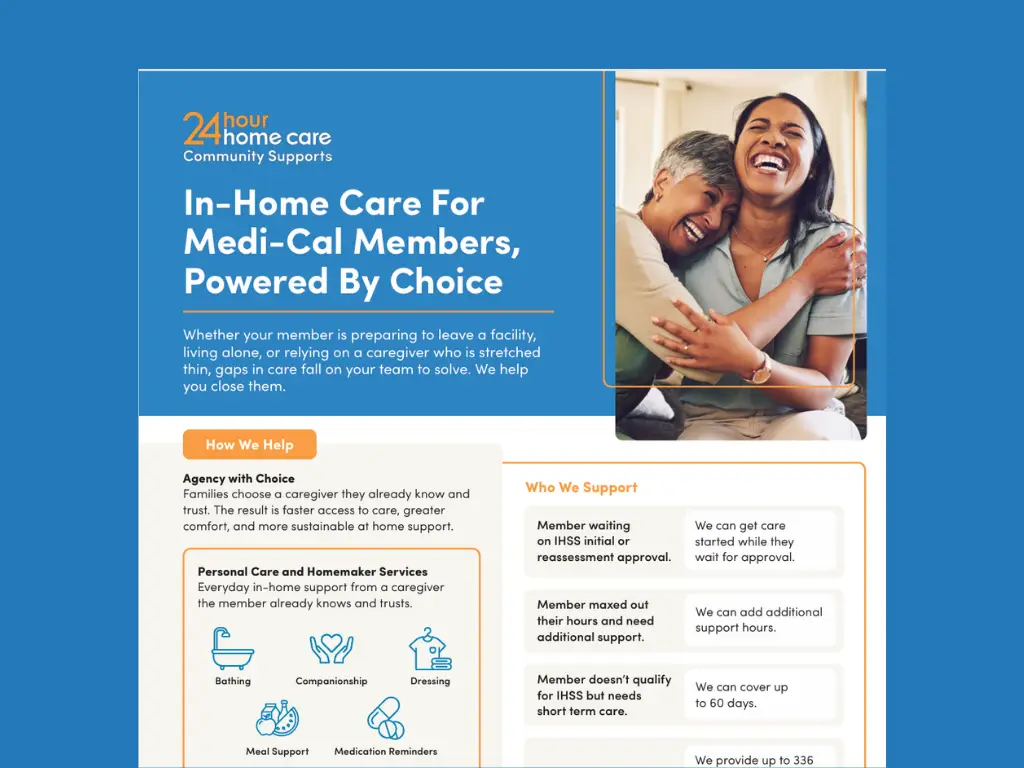
Through 24 Hour Home Care’s Community Supports program, eligible Medi-Cal members can receive non-medical in-home personal care and homemaker services designed to help them continue living independently in the place they’re most comfortable: home. These services provide practical assistance with activities of daily livings (ADLs) while helping reduce the risk of falls, hospitalizations, and unnecessary moves to higher levels of care.
What makes 24 Hour Home Care different is our Agency With Choice model. Rather than having a caregiver assigned to them, eligible members can choose someone they already know and trust—such as a family member, friend, neighbor, or other trusted person in their community—to provide care. We handle the hiring, onboarding, training, and payroll, making it easier for families to access support while preserving the relationships that matter most.
With the right support, older adults can maintain their independence, stay connected to their communities, and continue aging safely at home.